

If you’ve come across the term dysautonomia, it’s often because you’re trying to make sense of symptoms that don’t seem to fit neatly together. You might feel dizzy, fatigued, anxious, or have trouble regulating your heart rate, digestion, or sleep. In many cases, these experiences are linked to the dysautonomia nervous system, even if you don’t yet have a formal diagnosis.
When Symptoms Don’t Add Up
In a medical setting, dysautonomia refers to a diagnosed condition confirmed through specific testing. These tests often measure how your body performs under stress. In our chiropractic studio in North Vancouver, it describes a nervous system that is struggling to regulate itself efficiently, even before a formal diagnosis is made. Understanding this perspective can help you feel more informed and less dismissed as you search for answers.
Dysautonomia and the Autonomic Nervous System
Your autonomic nervous system controls the functions you don’t consciously think about. This includes heart rate, breathing, digestion, and blood pressure. It has two main branches:
- The sympathetic system (your “fight or flight” response)
- The parasympathetic system (your “rest and digest” response)
A healthy system moves between these states based on what your body needs. You speed up when required, then return to a calm baseline when the demand passes.
When autonomic dysfunction develops, that flexibility starts to fade. Your system may stay stuck in a stress response or fail to activate when needed. Over time, this can lead to symptoms that feel unpredictable and difficult to manage.
Causes of Dysautonomia and Nervous System Stress
There isn’t one single cause of dysautonomia. Instead, it often develops from a combination of stressors that overwhelm the nervous system over time. Some common contributors include:
- Chronic stress or burnout
- Physical trauma such as car accidents
- Illness or infection
- Hormonal changes, including pregnancy and postpartum shifts
- Neurological stress during development in infants or children
In more complex cases, central autonomic dysfunction may be involved, where the brain and spinal cord have difficulty regulating signals properly. This can affect multiple systems in the body at once.
Dysautonomia and the Vagus Nerve
The vagus nerve plays a key role in calming your system and supporting recovery. It helps regulate heart rate, digestion, and inflammation. When people talk about dysautonomia and the vagus nerve, they are often referring to reduced vagal tone or poor communication between the brain and body.
If vagus nerve function is low, your body may struggle to return to a calm state after stress. This can leave you feeling wired, fatigued, or both at the same time.
How Medicine Measures Dysautonomia
In a clinical setting, dysautonomia is often evaluated using stress-based testing. This can include:
- Tilt table testing
- Heart rate and blood pressure responses under load
- Heart rate variability during physical stress
These tests are valuable. They show how your body performs when pushed. This helps confirm a diagnosis and identify more severe cases.
However, these assessments focus on how your system reacts in a controlled, provoked environment. They don’t always reflect how your nervous system is functioning throughout your daily life.
What We Look For: Measuring Function at Rest
At Launch Chiropractic, the focus shifts to how your nervous system is functioning at baseline. This is where patterns often become clearer.
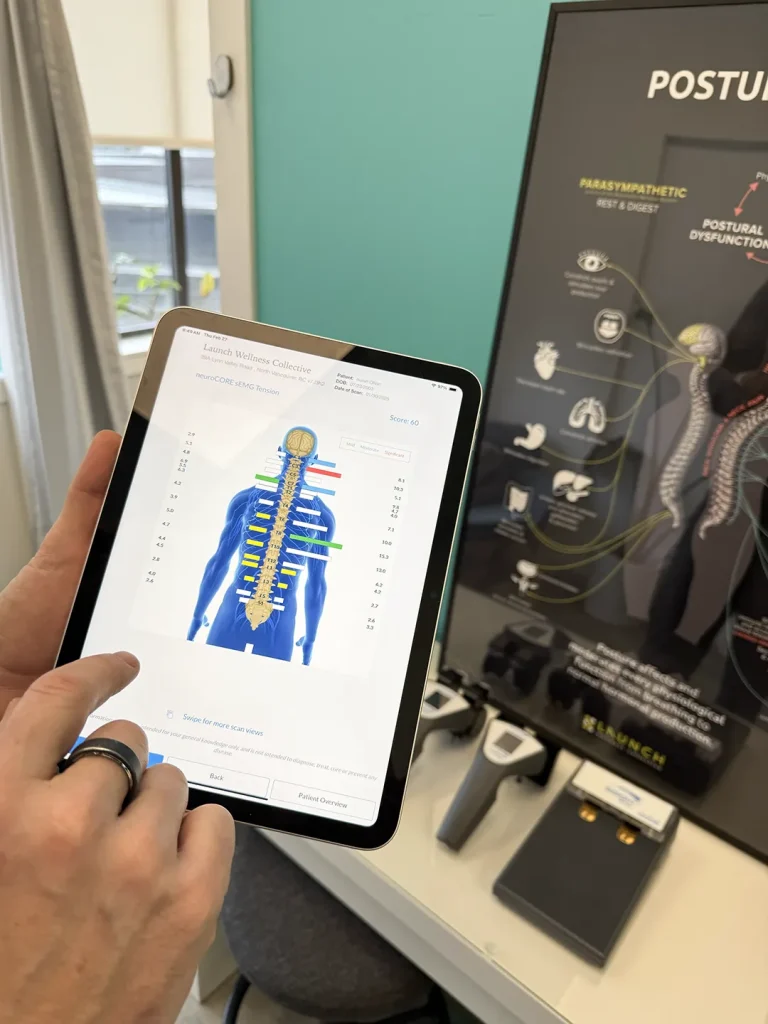
Using advanced iNSiGHT neuro technology from CLA which includes heart rate variability testing, you can see how your system is operating when you are at rest. These scans include:
- HRV (heart rate variability) analysis
- Surface EMG to assess muscle and nerve activity
- Thermal scans to evaluate autonomic balance
This approach provides insight into whether your system is stuck in stress mode, under-responsive, or struggling to adapt. It reflects how your body is functioning day to day, not just during a test.

Why Baseline Matters in Treatment
If your nervous system can’t regulate itself at rest, it becomes harder to respond properly under stress. This is where many symptoms begin.
Looking at baseline function helps guide a more personalized treatment approach. Instead of only managing symptoms, care can focus on restoring regulation and improving adaptability.
This is especially relevant if you are dealing with ongoing symptoms that affect multiple areas of your health.
A Starting Point for Complex Symptoms
If you’re dealing with unexplained symptoms, it’s easy to feel stuck between answers. Dysautonomia and autonomic dysfunction don’t always show up clearly in standard tests, especially in the early stages.
A nervous system assessment can offer a different starting point. It helps you understand how your body is functioning beneath the surface and why certain symptoms may be happening.
At Launch Chiropractic in North Vancouver and Lynn Valley, care is designed for a wide range of people, including infants, kids, teens, adults, pregnant and postpartum moms, athletes, and those recovering from car accidents. Your nervous system plays a role in all of these stages.
If you’re ready to explore what your body is trying to tell you, you can book an appointment or start with a free initial health consultation. It may be the first step toward understanding your symptoms and finding a path forward.